

A Research-Aligned Literacy Tool for Real Classroom Growth
OnWord Stories combines structured literacy and higher-order thinking into one cohesive platform—designed for consistent, measurable improvement across classrooms and grade levels.

Why Schools Choose OnWord Stories
Schools need tools that promote consistency, rigor, and teacher effectiveness.
Developmentally aligned reading levels (A–Z)
OnWord provides:
Structured literacy aligned to the Science of Reading
Strong scaffolds for diverse learners
Bloom’s-based comprehension questions across all levels
Consistent text complexity across classrooms
Materials that reduce teacher planning load

Anchored in the Science of Reading
OnWord’s Guided Reading Framework integrates the essential components of structured literacy so schools can deliver coherent, research-based reading instruction.
Each level includes clear expectations for vocabulary, syntax, paragraphing, comprehension targets, and genre distribution, allowing leaders to ensure fidelity and coherence across classrooms.
Schoolwide Consistency

Clear decodable patterns
Controlled phonics progression
High-frequency word repetition
Built-in fluency scaffolds
Word Recognition
Students select interest categories so content feels personally meaningful.
This builds motivation which is a key factor for engagement and reading growth.
Student Interest
Intentionally sequenced syntax
Gradual increase in sentence complexity
Structured Tier 1 → Tier 2 → Tier 3 vocabulary integration
Text structures that prepare students for academic reading
Language Comprehension
Strategic Scaffolding
Visuals in early levels
Vocabulary pop-ups
Supports that gradually fade as independence increases
A–Z Guided Reading Framework & Standards Alignment
The A–Z progression aligns to:
CCSS Reading Literature (RL)
CCSS Reading Informational Text (RI)
CCSS Foundational Skills (RF)
CCSS Language Standards (L)
Florida B.E.S.T. ELA Reading & Vocabulary Standards
This ensures alignment across grade bands and supports data-driven instruction.
Each level includes detailed expectations for:
Sentence and syntax complexity
Vocabulary tiers
Paragraphing and text length
Comprehension skills
Genre distribution
This creates consistency and clarity for teachers and leaders across classrooms.

Bloom’s Taxonomy defines the type of thinking, while Webb’s Depth of Knowledge defines the complexity—together ensuring intentional, increasing cognitive rigor.
Cognitive Rigor Built into Every Level
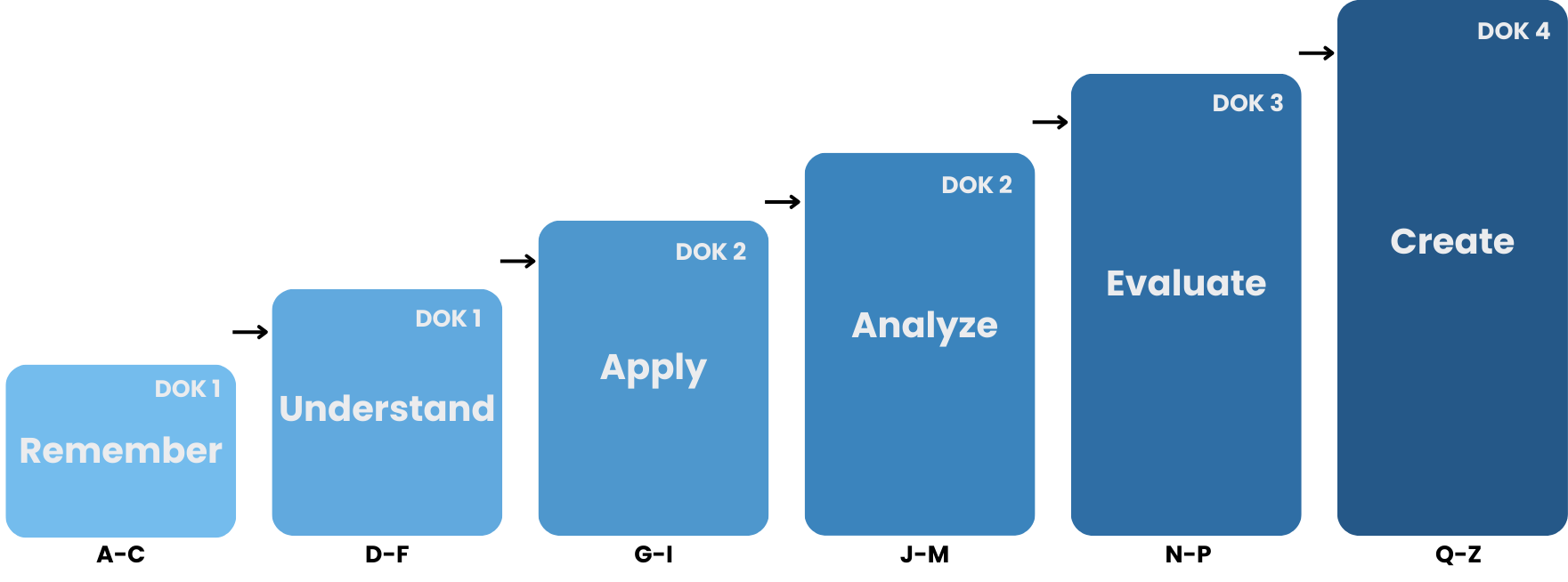
Dual Research Framework
Bloom's defines the type of thinking; DOK guides the complexity of thinking.
OnWord supports all four:
DOK 1: recall
DOK 2: skills & concepts
DOK 3: strategic thinking
DOK 4: extended reasoning
Systemwide Consistency
Ensures coherent rigor expectations across classrooms and grade levels.

Implementation without Disruption
Minimal onboarding
Aligns with existing guided reading frameworks
Easy for teachers to adopt and sustain
Works seamlessly across K–5

Teachers can easily view comprehension trends, vocabulary patterns, reading level progress, and areas needing reteaching.
Dashboard & Insights

School leaders often explore new tools alongside their instructional team. If you’d like to see how OnWord Stories fits into day-to-day classroom instruction, we’ve created a dedicated overview specifically for teachers and literacy educators.
It highlights how OnWord supports reading comprehension, student engagement, and instructional alignment—without adding extra prep or disrupting what’s already working.